Did your radon test come back high? You are not alone in North Pole and the Fairbanks North Star Borough. Interior Alaska has a higher radon potential than many places in the Lower 48, and it often shows up during home inspections. This guide explains what your result means, how to confirm it, the best mitigation options for our cold climate, and how to handle radon in a sale or purchase. Let’s dive in.
What a high result means in North Pole
Radon is a colorless, odorless radioactive gas that can increase lung cancer risk with long-term exposure. The U.S. Environmental Protection Agency advises taking action at or above 4 picocuries per liter (pCi/L). According to the EPA’s radon guidance, there is no known safe level, so lower is better.
Interior Alaska, including North Pole and the wider FNSB, sees many homes above the 4 pCi/L action level. That is why testing is common in local transactions and why you should plan for mitigation if results are elevated. The CDC’s radon health overview provides additional medical context if you want to learn more.
Confirm the result with smart testing
A single short-term test gives you a snapshot. Follow these steps to confirm the real picture and move forward with confidence.
Short-term vs long-term tests
- Short-term: 2–7 days. Good for quick screening or real estate timelines. Results can swing with weather and ventilation.
- Long-term: 90+ days. Best estimate of your year-round average. Covers seasonal changes, which matter in Interior Alaska.
- Continuous radon monitors (CRMs): Provide hourly data. Useful for diagnostics and for post‑mitigation checks.
If your short-term test is 4 pCi/L or higher
- If time allows, run a long-term test to confirm the annual average.
- If you are under contract and need fast clarity, schedule a certified short-term retest with a CRM. Use those results to decide on mitigation or credits now, and still plan a long-term test after closing.
Testing tips that matter
- Test the lowest livable level where people spend time.
- Keep typical living conditions and normal HVAC operation during the test.
- Document device type, placement, dates, and chain-of-custody, especially for purchase negotiations.
For Alaska-specific testing resources, visit the Alaska DEC radon program.
Mitigation that works in Interior Alaska
Most homes reduce radon effectively with active soil depressurization (ASD). Your mitigator will select the exact approach based on your foundation and soil conditions.
Core methods
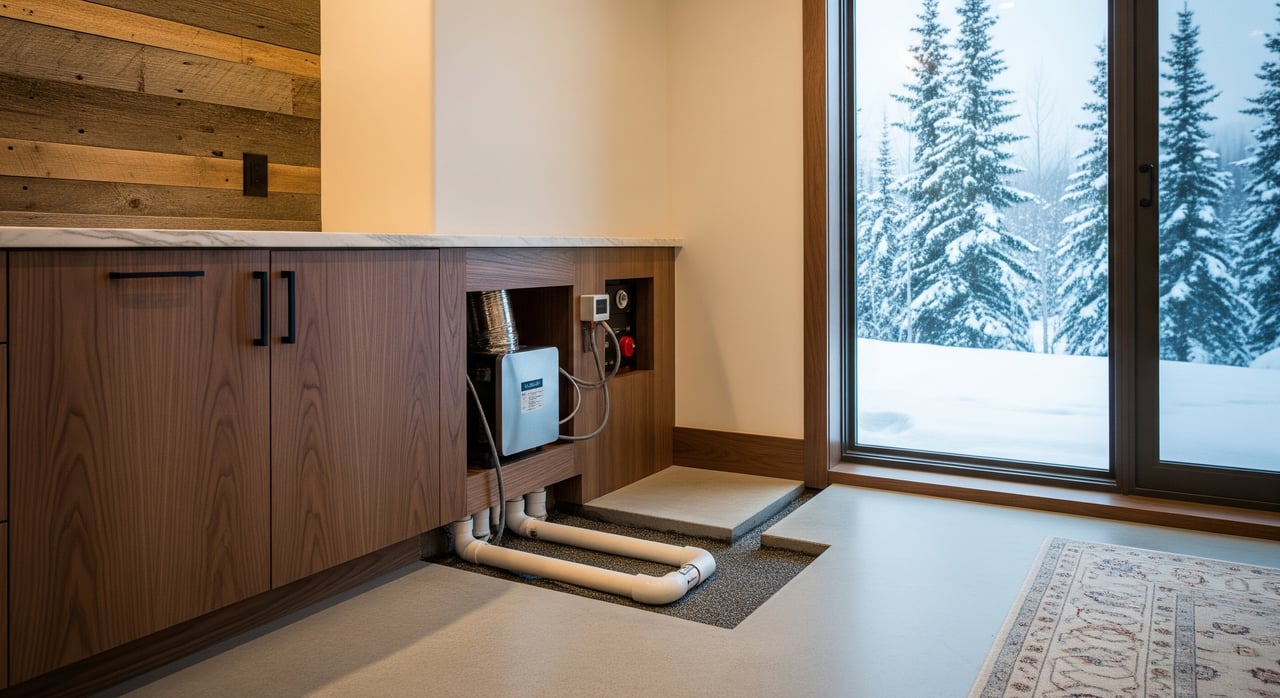
- Sub‑slab depressurization: A suction pipe and fan pull soil gases from beneath the slab and vent them outside.
- Sump or drain‑tile suction: The system connects to an existing sump or perimeter drain to create effective suction paths.
- Block‑wall suction: For hollow block foundations, the system pulls gas from wall cavities.
- Crawlspace solutions: Encapsulate with a vapor barrier and add suction or controlled ventilation to manage soil gases.
Sealing cracks helps performance but is rarely effective on its own.
Cold‑climate and permafrost considerations
- Freeze planning: Exterior pipes and fans need insulation and freeze protection. Fans may be mounted in conditioned spaces or designed with heated enclosures.
- Soil behavior: Frozen ground and permafrost can change how air moves under your home. Local experience is important for reliable suction.
- Energy and safety: Systems run continuously, so designs should limit heat loss. Your contractor should also check for any risk of backdrafting from furnaces or water heaters.
Performance expectations
Properly designed systems often reduce radon by 50 to 99 percent. The goal is below 4 pCi/L and preferably under 2 pCi/L when feasible. Your contractor should perform diagnostics during installation and verify results with post‑mitigation testing, consistent with EPA mitigation guidance.
How to hire a qualified mitigator
Choosing the right professional is the single best way to get predictable results, especially in our climate.
What credentials to look for
- State or nationally recognized certification. Look for pros certified through programs recognized by AARST and NRPP. You can learn about industry standards at AARST and check certification programs through NRPP.
- Proof of current certification and insurance.
Ask these questions
- What certifications do you hold, and can you share your certificate numbers?
- What experience do you have with FNSB or North Pole homes and frozen-ground conditions?
- Which method do you recommend for my foundation and why?
- What diagnostics will you perform before and after installation?
- Where will the fan be located, and how will you prevent freezing or condensation issues?
- What performance target will you commit to and how will you verify it?
- What are the warranty terms for the fan and workmanship?
- Will you handle any required permits and electrical coordination?
What to include in the contract
- Scope of work and materials.
- Target radon level and the post‑mitigation testing plan.
- Start and completion dates, cleanup, and total cost.
- Documentation deliverables: system schematic, photos, test reports, fan make and model, and warranties.
Red flags
- No certifications or reluctance to share credentials.
- Vague claims without a testing protocol.
- No diagnostic testing during installation.
Costs, timeline, and what to expect
- Typical U.S. range: About 800 to 3,000+ dollars, depending on foundation and complexity.
- In Interior Alaska, costs can be higher due to freeze protection, longer pipe runs, and limited contractor availability.
- Installation often takes a day for many homes. Complex projects may need more time.
- Post‑mitigation testing can start right away with a CRM for quick feedback; plan a long‑term test for final confirmation of your annual average.
Documentation buyers and sellers expect
Good paperwork builds trust and smooths negotiations. Include:
- Signed contract, installer contact info, and warranties.
- Post‑mitigation test results with device type, placement, dates, and numbers.
- System schematic, photos, and the fan’s make, model, and serial number.
- Maintenance instructions and labels. Many pros add a service sticker near the system or breaker panel.
If you tested and mitigated before listing, show both the original high result and the post‑mitigation reading. That before-and-after story reassures buyers in North Pole and the broader FNSB.
Buyer and seller strategies in a transaction
For buyers
- Make radon testing part of your offer. Use a certified tester and keep the results.
- If results are high, request mitigation by a certified pro or negotiate a credit. Require documentation and post‑mitigation testing in writing.
- If timing is tight, accept a certified short‑term CRM test now and follow with a long‑term test after closing.
For sellers
- Consider pre‑listing testing. If levels are high, mitigate and present the full documentation package.
- Market the system as a safety upgrade with warranties and proof of results.
- If you decide not to mitigate before listing, be ready for buyer requests for repairs or credits.
For general consumer guidance and risk information, see the EPA’s radon pages and the CDC’s overview of radon health effects. For Alaska resources and local contacts, use the Alaska DEC radon program.
Maintenance and follow‑up testing
- The fan runs 24/7. Expect several years of service life, often 5 to 10 years.
- Check operation regularly using the visual indicator or in‑line gauge.
- Retest every 2 to 5 years, after any major remodel, or after fan replacement or system changes.
- Keep your records. Clean documentation helps during future sales.
A simple step‑by‑step plan
- Test with a certified device or pro. Use a long‑term test if timing allows.
- If you are at or above 4 pCi/L, get a certified mitigator to assess the home and propose a plan.
- Gather two or more detailed quotes and compare methods, warranties, and local experience.
- Install the system and ensure diagnostics are done during the work.
- Verify performance with a short‑term CRM test, then follow with a long‑term test.
- File your documentation: contract, schematic, test reports, fan information, and warranties.
- Maintain the system and retest on a regular schedule.
When you handle radon with solid data, the right contractor, and clear documentation, you protect your health and keep your transaction on track.
If you need help aligning testing, negotiations, and disclosures with your real estate goals in North Pole or the greater Fairbanks area, reach out to the Leaders Real Estate Team for local guidance and a free, no‑pressure consultation.
FAQs
What is radon and why is it common in North Pole?
- Radon is a radioactive gas from soil and rock; Interior Alaska has higher potential, so elevated results are common in North Pole and the FNSB according to EPA and Alaska DEC resources.
What level is considered high for radon in a home?
- The EPA recommends taking action at or above 4 pCi/L, and also notes there is no known safe level, so reducing levels as low as feasible is best.
Do I need a long‑term test after a high short‑term result?
- Yes, if timing permits. A long‑term test confirms the annual average. In tight timelines, a certified short‑term CRM can guide immediate decisions.
What mitigation methods work best in cold climates?
- Active soil depressurization is the most reliable, with designs adapted for freeze protection, energy efficiency, and safe appliance operation.
How much does radon mitigation cost in FNSB?
- Many systems fall between about 800 and 3,000+ dollars, but Interior Alaska projects can run higher due to freeze protection, materials, and labor.
How long does radon mitigation take and when can I retest?
- Many installations finish in one day. You can run a short‑term CRM check right away, then follow with a long‑term test for final confirmation.
Is sealing cracks enough to reduce radon on its own?
- No. Sealing helps but rarely solves the problem alone. It is most effective when used with an active mitigation system.