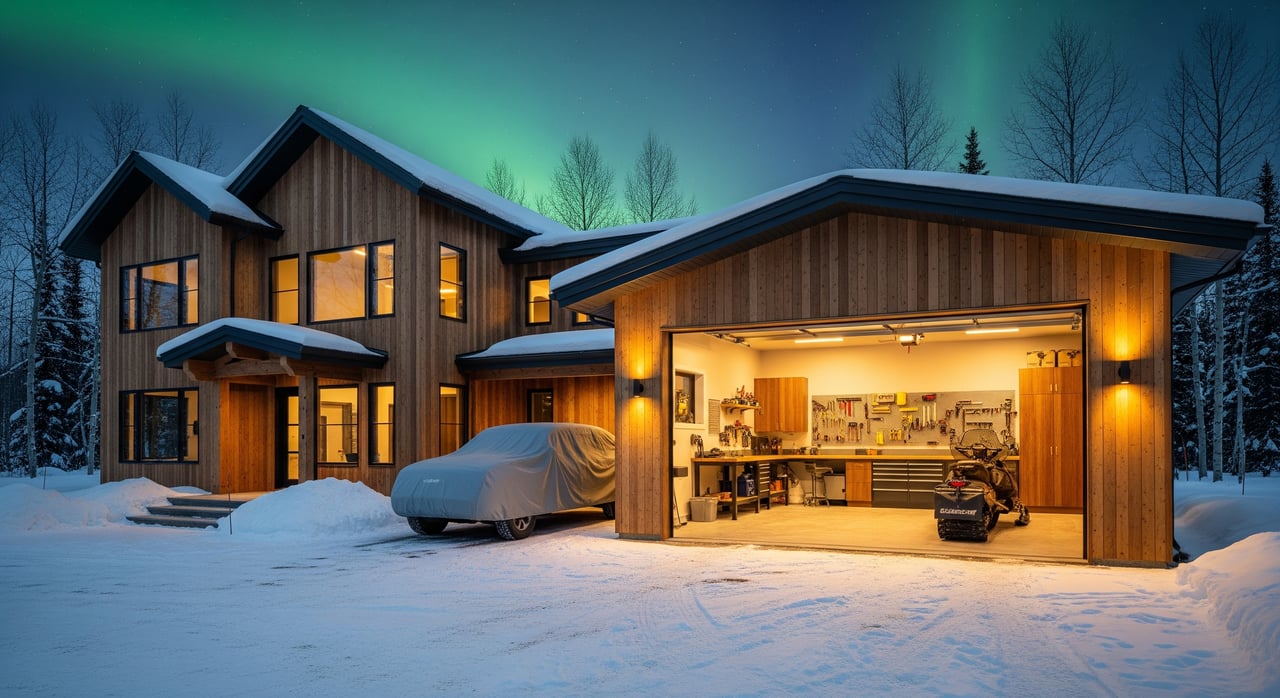
Picture a winter morning in North Pole. Your truck starts easily, the shop is warm, and the snowmachine trailer is ready without a game of Tetris. If that sounds like your goal, you are not alone. Buyers here often put shops, garages, and smart storage at the top of the must‑have list.
In this guide, you will learn which layouts work best, how much height you need for RVs and lifts, what heating and power options make sense, and how to plan driveways for winter. You will also see what adds resale value and how to shop or prepare a property with confidence. Let’s dive in.
What buyers want in North Pole shops
Common shop and garage types
- Single-bay garage with a workbench for hobby use and tools.
- Double or triple-bay garages for families that also want hobby space.
- Drive-through or RV bays with long, deep footprints and high doors so you avoid backing out.
- Detached workshops for noisy or dirty work, with separate heat and power.
- Hybrid shop-storage layouts with loft or mezzanine space for seasonal gear.
- Steel or pole buildings for cost and speed, or stick-built for easier code alignment and aesthetics.
Layout features that work in winter
- A defined workbench zone, tool storage, and lockable cabinets.
- Clear floor areas for a welder, compressor, or a future lift.
- Separate storage for flammables and seasonal gear like snowmachines and ATVs.
- Mezzanines for totes and holiday items to keep the floor free.
- A mudroom or vestibule to cut heat loss and keep snow out of the house.
Sizing, doors, and clearances
Door heights and widths
- Standard doors are 7 to 8 feet tall for cars and SUVs.
- Taller doors at 9 to 10 feet fit many pickups and campers.
- RV storage often needs 12 to 14 feet of clear door height, with 12 to 14 feet of width per bay for comfort.
Ceiling height and lifts
- Typical garage ceiling height is 9 to 10 feet.
- Plan for 12 to 14 feet of clear height if you want a two-post or four-post lift.
- Confirm lift specs for slab thickness, anchors, and required clearances before you buy.
Heat, power, and cold design
Heating options that fit Alaska
- Forced-air furnaces (propane, oil, or natural gas where available) warm up quickly and can serve multiple bays.
- Hydronic radiant floor heat is comfortable and efficient for slab-on-grade shops if you insulate under the slab.
- Electric heat works for spot or zone heat but can be costly in large spaces.
- Wood or pellet stoves are common backups, with proper clearances and ventilation.
- Dedicated unit heaters are good for intermittent use but may heat unevenly.
Electrical capacity and outlets
- Many buyers prefer a 200A service, and some heavy users seek 400A or a separate subpanel for the shop.
- Plan 240V circuits for welders, compressors, and EV or RV charging (30A to 50A or more as needed).
- Use multiple dedicated circuits for tools, heaters, and mechanical systems to avoid tripping.
- A generator hookup or transfer switch adds winter resilience.
Moisture, drains, and ventilation
- Insulate slabs and perimeter footings to reduce frost heave and heat loss.
- Air seal doors and wall penetrations to keep heat in.
- Manage humidity with controlled ventilation or an HRV to prevent condensation and frost.
- Floor drains in unheated areas can freeze. If you include drains, route to a heated sump or use winterization strategies per local code.
Driveways, RVs, and snowmachines
Length, width, and turning
RV storage often needs 40 to 60+ feet of driveway length. Smaller Class B or C rigs may fit in 25 to 35 feet.
A single-lane pad works best at 12 to 14 feet wide. Two-lane or turnarounds often need 20 to 24 feet.
Many RVs and trailers need a 30 to 40 foot turning circle, so allow a straight approach or a hammerhead T for easy exit.
Keep grades below about 8 to 10 percent to help with winter access.
Surfaces and snow storage
- Concrete is durable and handles plowing and heavy loads well.
- Asphalt is common but may rut under heavy axles and freeze-thaw cycles.
- Well-compacted aggregate with geotextile is a cost-effective choice for longer runs.
- Design snow storage areas so plows can push snow aside without blocking doors or access.
What adds value for resale
- Heated and insulated shop space, or at least a heated vestibule for year-round use.
- High-clearance doors and drive-through RV bays.
- 200A or higher service with labeled 240V circuits.
- A durable slab with frost protection and anchoring suitable for lifts.
- Driveways planned for RV length, turning, and winter plowing.
- Secure storage, bright lighting, and a separate mechanical or utility room.
Tips for buyers
- Define your top use cases first. Daily parking, RV storage, or a vehicle lift may set minimum door and ceiling heights.
- Measure your biggest items, including racks, campers, and trailers. Match them to door height, depth, and turning room.
- Confirm power capacity and outlets. Look for 240V circuits and room in the panel.
- Check heating type, insulation, and air sealing. Ask how the space performs at low temperatures.
- Review slab details if a lift is a goal. Ask about thickness, reinforcement, and anchor history.
- Walk the driveway for winter flow. Look for safe grades, snow storage, and turnaround space.
Tips for sellers
- List exact dimensions. Include bay widths and depths, door heights and widths, ceiling height, and slab notes if known.
- State electrical details. Note service size, 240V outlets, and any transfer switch or generator.
- Describe heating clearly. Identify the system type and whether the slab or shop is insulated.
- Explain driveway capacity. Share length and turning details, and whether it fits an RV class or trailer size.
- Set expectations. Note snow removal realities and fuel types so buyers can budget for winter.
Permits and local checks
- Building, electrical, plumbing, and mechanical permits are typically required for new detached shops or major remodels.
- Zoning rules may affect accessory building size and placement, including setbacks and lot coverage.
- Coordinate with the local electric utility for service upgrades and generator interconnection.
- Roofs must be designed for local snow loads, which can be high. Confirm current requirements.
- For slabs and pads, address frost-susceptible soils and consider frost-protected shallow foundations where appropriate.
Ready to find the right fit?
The right shop or garage makes daily life simpler in North Pole and protects your investment in every season. If you want help matching features to your goals, our team is ready to guide you through options, inspections, and negotiations with clear, local advice. Connect with the Leaders Real Estate Team to get expert guidance tailored to Interior Alaska.
FAQs
What garage door height fits RVs in North Pole?
- Many mid to large motorhomes and fifth-wheels need 12 to 14 feet of clear door height, while large trucks and campers often fit with 9 to 10 foot doors.
How much ceiling height do I need for a vehicle lift?
- Most two-post or four-post lifts need 12 to 14 feet of clear ceiling height, plus a reinforced slab that meets the lift manufacturer’s specs.
What heating system works best for a North Pole shop?
- Radiant floor heat is efficient for steady use, while forced-air offers faster warm-up and flexibility; choose based on fuel availability and how often you heat the space.
Do I need permits for a detached shop or RV pad?
- Yes, expect building and electrical permits, and possible zoning approvals; contact local building and planning offices early in your process.
How should I design a driveway for RVs and winter?
- Aim for 40 to 60+ feet of length for larger rigs, 12 to 14 feet of width for a single pad, moderate slopes under about 8 to 10 percent, and a practical turnaround or hammerhead T.